Dolly Parton, Country Night Gstaad, and the Real Reason We Travel
Country Night Gstaad turns 37 this weekend. What a pedal steel guitar in a Swiss valley tells us about why culture — not scenery — is what really moves people. And a farewell to the woman who understood it best.
On Friday evening, in a tent pitched in a valley in the Bernese Oberland, a pedal steel guitar will bend its first note of the weekend, and several thousand people in cowboy boots will settle into their seats beneath one of the most photographed skylines in Europe.

Gstaad — a village more readily associated with cashmere, discreet chalets and the soft clink of a Champagne flute — will spend two nights as a small, immaculately behaved corner of Tennessee.
This is the 37th Country Night Gstaad, on 11 and 12 September 2026. It is one of the more improbable fixtures in the European calendar, and one of the most quietly instructive. Because what it demonstrates, year after year, is a truth the travel industry keeps rediscovering: people do not travel to places. They travel to what is happening in them.
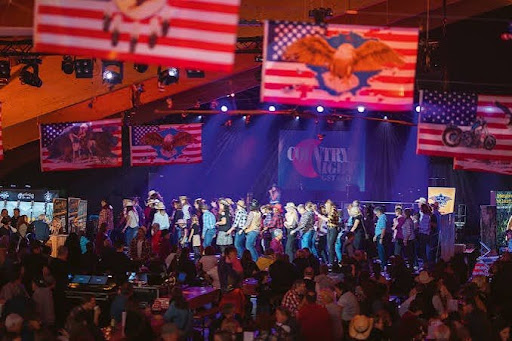
The unlikeliest tradition in the Alps
It began in 1989, in a tent in Gstaad's Eggli district — an act of faith by a handful of people who believed that a music born in the Appalachian foothills might find a home in the Swiss Alps. Thirty-seven years later, the roll call reads like a wing of the Country Music Hall of Fame.
Loretta Lynn played here. So did Conway Twitty, Buck Owens, George Jones and Tammy Wynette. Kenny Rogers came. Emmylou Harris came more than once. Randy Travis, Rosanne Cash, Marty Stuart, Trisha Yearwood, Lyle Lovett, Tanya Tucker, The Mavericks, Lee Ann Womack, Miranda Lambert, Little Big Town, Carly Pearce, Old Crow Medicine Show, Scotty McCreery — the list runs across four decades and very nearly the whole history of the modern genre.
This year's headliner is Dwight Yoakam, and his booking carries a particular poetry. Yoakam last stood on that stage in 1992, when the festival was four years old and still finding its feet. He returns thirty-four years later, with more than twenty-five million albums sold, twenty-one Grammy nominations and a back catalogue that helped drag country music out of Nashville's polish and back towards its harder, stranger edges. He is joined by the Texan Drake Milligan, the Grammy-decorated acoustic ensemble Appalachian Road Show, and Amber Rae, a Nashville-inflected country-pop singer from Winterthur — proof that the genre has now been growing in Swiss soil long enough to produce its own.
Everybody raves about how beautiful it is.
— Jim VanCleve, Appalachian Road Show, on the festival's reputation among musicians
What visiting artists tend to remark on is not the mountains but the audience. Country Night has a house etiquette all its own: the crowd photographs the opening song together, as a group, and then puts the phones away and listens. Seated. Attentive. For two nights, a European village performs American music with more reverence than most American rooms manage. It is very Swiss, and it is completely charming.
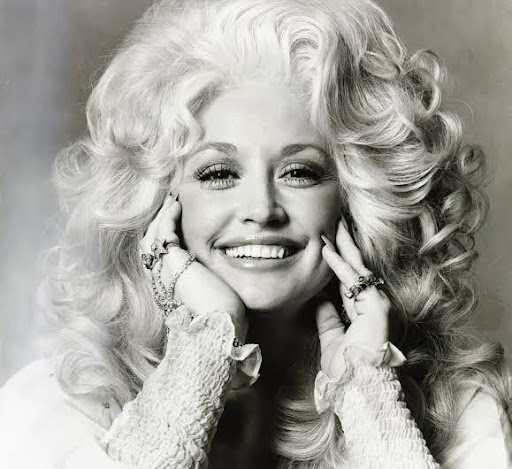
A farewell to Dolly
This year the tent will feel different, because this is the first Country Night since the world lost Dolly Parton.
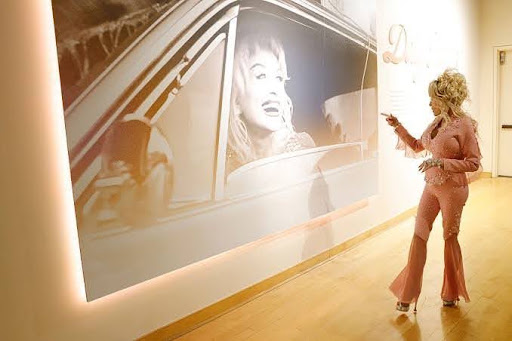
She died in Nashville on 25 August 2026, aged eighty, after a short illness. The numbers are almost beside the point, but they are staggering: more than a hundred million records, over three thousand songs written, eleven Grammy Awards, twenty-five number-one country singles, a place in the Rock & Roll Hall of Fame, a theme park, a film career, and a foundation that has now put more than 330 million books into the hands of children who might otherwise have owned none.
She was, by some distance, the most famous person country music ever produced, and — more unusually — one of the very few global stars who seemed to make absolutely everybody feel better about being alive.
Switzerland has its own small place in that story. On 14 July 2014, Parton played the Piazza Grande in Locarno, the great open-air square that fills each summer for the film festival, closing a European tour that had run for twenty-three shows. Two weeks earlier she had walked onto the Pyramid Stage at Glastonbury and drawn the largest crowd of the entire festival — a lifelong ambition, fulfilled at sixty-eight, in a field in Somerset. Organiser Emily Eavis has since called her an untouchable legend.
The Parton name has been spoken from the Gstaad stage before, too: her sister Stella Parton performed here in 1992, on the same bill as a young Dwight Yoakam.
Dolly loved this corner of the world, and she came back to it. She knew the valley, she knew the festival, and she returned to it over the years the way you return to a house that has been kind to you — not as a headliner passing through, but as someone who had found a place that suited her.
What is beyond doubt is that a festival like this one exists because of her. Every European promoter who ever gambled on country music was gambling, in part, on the idea that a woman from a one-room cabin in the Smoky Mountains could hold a field in Somerset, a square in Locarno and a tent in the Alps. She could. She did. Repeatedly.
What Dolly understood about places
It is tempting, in a tribute, to reach only for the sequins and the one-liners. She was very funny, and she was funny on purpose — the glitter was a strategy, and she never pretended otherwise. Challenged about her image by Barbara Walters in 1977, she answered with the sharpest line of her career:
The joke's on the public. I know exactly what I'm doing.
— Dolly Parton, 1977
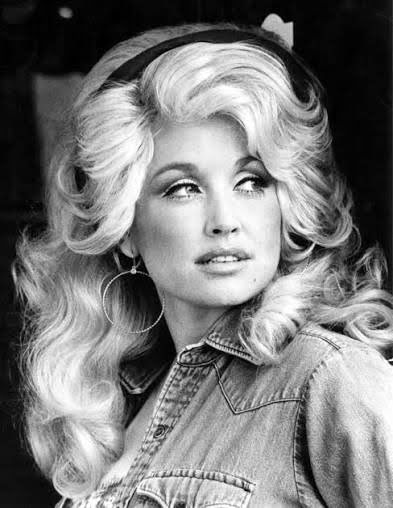
But underneath the rhinestones sat a genuinely coherent philosophy, and one that travels remarkably well. It began with knowing exactly where she came from. The song most people name first when they name her best is not one of the big hits but a quiet one about a coat her mother sewed for her out of rags — a child mocked at school for wearing scraps, and a family that had, as the song has it, no money at all and everything that mattered. She wrote it on a dry-cleaning receipt. She kept the receipt framed for the rest of her life.
Everything else in her thinking grows out of that: an insistence that your origins are an asset rather than an embarrassment, and that a life is something you build deliberately rather than something that happens to you.
Find out who you are and do it on purpose.
— Dolly Parton
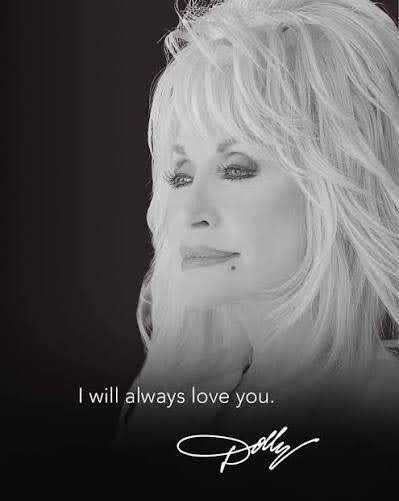
She was clear-eyed about difficulty, too, and never sold the easy version. Two of her most-quoted lines are about weather, and neither pretends the weather is optional:
“The way I see it, if you want the rainbow, you gotta put up with the rain.” And, more bracingly: “Storms make trees take deeper roots.”
She was scathing about the trap of a busy life spent on the wrong things — “don't get so busy making a living that you forget to make a life” — and she believed absolutely in agency: if you don't like the road you're walking, she said, start paving another one. She thought it was hard to be a diamond in a rhinestone world, and she spent sixty years proving it could be done.
And then there is the part that matters most, and which she almost never talked about in interviews: she gave the money away. The Imagination Library posts a free book every month to a child from birth until they start school, anywhere it operates — the United States, the United Kingdom, Ireland, Canada, Australia. More than 330 million books, and counting. She built it because her own father could not read.
Culture is the itinerary
Here is where a country festival in the Alps and a woman from East Tennessee arrive at the same conclusion.
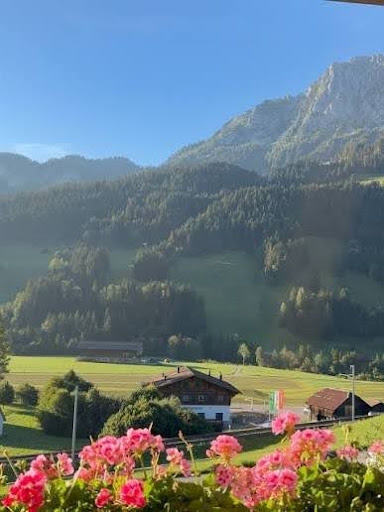
The mountain does not change. The view from a chalet balcony in Gstaad in the second week of September is more or less the view from that same balcony in the second week of February, allowing for snow. What changes — what actually gives you a reason to be there on one date rather than another — is the calendar.
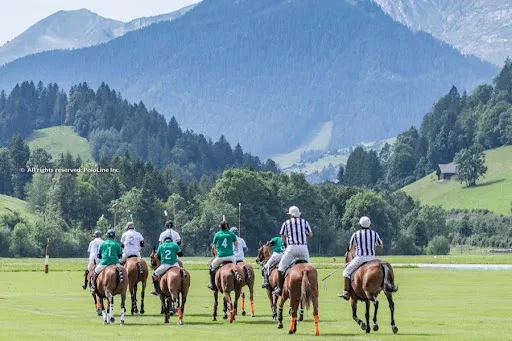
And Gstaad's calendar is extraordinary. The Menuhin Festival, founded by Yehudi Menuhin in 1957 and now in its seventieth year, fills the valley's churches and tents with world-class classical music from mid-July into early September. Sommets Musicaux brings chamber music into the winter. Country Night closes the summer. There is polo on the airfield, beach volleyball improbably staged at 1,050 metres, and the Züglete each autumn, when the cattle come down from the high pastures wearing flowers and enormous bells and the whole village turns out to watch.
Four different festivals; four different crowds; one valley. A visitor who came for Menuhin in August and returns for Country Night in September has not been to the same place twice. They have been to two entirely different towns that happen to share a postcode.
This is what a strong cultural calendar does for a destination. It converts a beautiful view — which is a one-time purchase — into a relationship. It gives people a reason to return at a different time of year, to bring different friends, to book the same house again. It creates the thing every destination actually wants and very few achieve: repeat visitors who feel like locals.
It also does something less commercial and more important. It means the place has a life of its own that is not staged for you. The audience at Country Night is not primarily an audience of tourists; it is Swiss, and it is regional, and it has been coming for decades. You are not being entertained. You are being let in.
Travelling the way she'd have wanted
If there is a way to travel that honours all of this, it looks something like the following.
Book around something, not just somewhere. Pick the dates from the programme, then find the house. A week chosen because of what is happening in it is a fundamentally different week from one chosen at random.
Buy a ticket to the local thing. Not the famous thing — the local thing. The village concert, the cattle descent, the festival the region has been running for thirty-seven years because it wants to, not because a tourist board told it to.
Stay long enough to become a regular somewhere. Three days makes you a visitor. Ten days makes you the person the café already knows the order for. Only one of those is worth the flight.
Take the children. Dolly Parton gave away a third of a billion books on the conviction that what a child encounters early sets what they think is possible. The same logic applies to a valley full of live music.
Support the music. Buy the ticket at full price, buy the record at the merchandise table, and understand that a festival that has survived thirty-seven years in a small Alpine village survived because people kept turning up.
The year that happens around the house
We spend a great deal of time talking about properties — the volume of a room, the angle of the light, the quality of the timber, how the terrace faces at six in the evening in July. That work matters, and we would not do it if we did not believe in it.
But a great house in a great valley is a beginning, not the point. What you are really choosing when you choose a place is the year that happens around it: the festivals, the processions, the concerts, the arguments about the programme, the neighbours who have been going since 1989, the strange and specific culture that a community has built for itself and is willing to share with anyone who shows up on the right weekend.
This weekend, in a tent in the Bernese Oberland, several thousand people will listen to a Kentuckian sing about heartbreak in a valley where almost nobody speaks his first language, and it will make complete sense to every single one of them. That is what culture does. It is why we travel. It is what turns a view into a home.
Dolly Parton, 1946–2026. Find out who you are and do it on purpose.
Photo credits: (1) Jason Kempin—Getty Images, (3) Gstaad my Love, (5) Photograph by Irving Penn / © Condé Nast, (7) Sony Music